


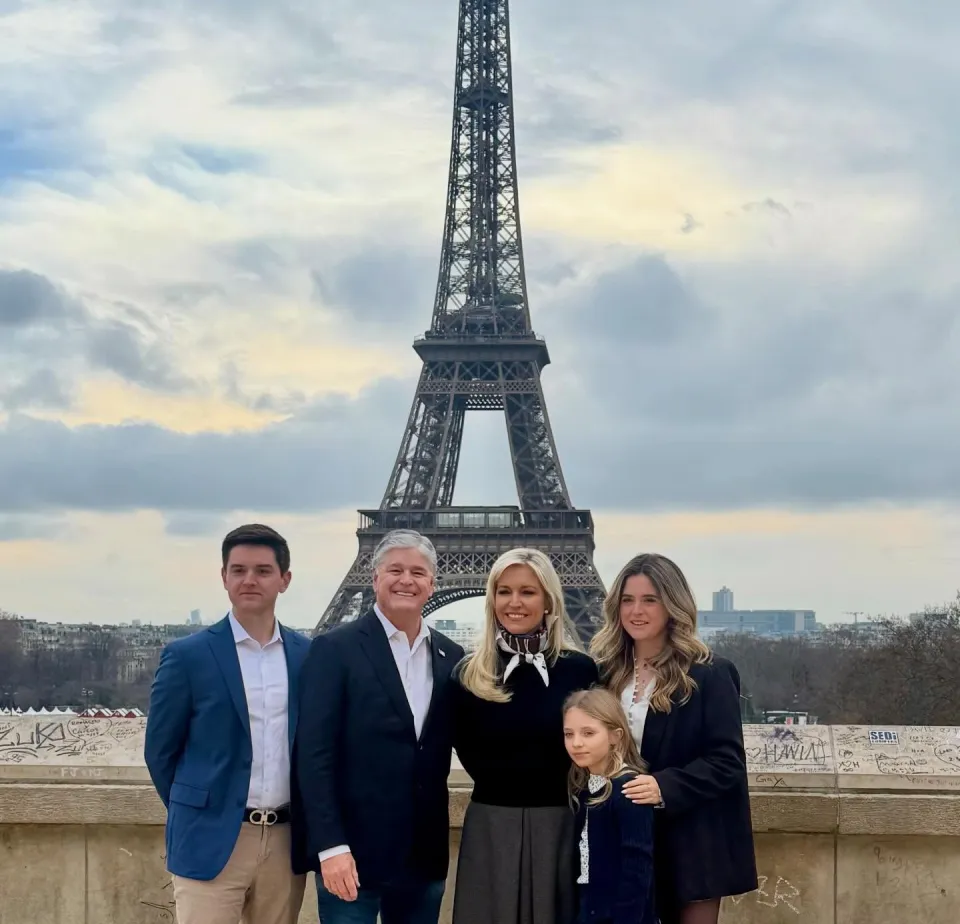
Ainsley Earhardt wakes before dawn, long before the first chyron flickers across American television screens. In the blue hour—when cities are quiet and kitchens glow—she prepares to speak to a nation that is anything but. Coffee steams. Studio lights warm. By the time most viewers reach for their phones, Earhardt is already mid-conversation, her voice measured, familiar, almost intimate.
Ainsley Earhardt has become a ritual for millions: a steady presence in the unsettled hours when politics, faith, family, and fear collide.
Origins in Southern Ground
Ainsley Earhardt’s story begins far from the media capitals of New York or Washington. Born in Spartanburg, South Carolina, and raised in a deeply Southern culture shaped by church, family, and community, she absorbed early the rhythms of hospitality and conviction that would later define her on-air persona. Her academic path—from the University of South Carolina to broadcast journalism—mirrored a traditional route into American media, yet her sensibility remained distinctly regional, rooted in what sociologists often describe as the Southern moral imagination (Encyclopedia Britannica – Southern Culture).
This grounding matters. In a media ecosystem often accused of coastal detachment, Earhardt’s Southern identity is not aesthetic—it is foundational.
Becoming a Morning Fixture
Her ascent at Fox News—a network founded by Rupert Murdoch in 1996 to challenge mainstream cable news ( Britannica)—coincided with a shift in how Americans consume information. Morning television transformed from headline delivery into cultural companionship.
On Fox & Friends, Earhardt occupies a specific role: not the sharpest partisan blade, nor the neutral moderator, but a bridge—between policy and personal life, between outrage and reassurance. Media scholars have long noted the power of parasocial relationships, where audiences form emotional bonds with media figures (Parasocial interaction). Earhardt’s appeal thrives in that space.
Faith, Femininity, and Public Voice
Unlike many broadcast journalists, Ainsley Earhardt openly foregrounds her Christian faith. Her books—particularly devotional works—align her with a tradition of American evangelical storytelling that blends testimony with self-help (Christian publishing overview – Britannica). In a culture where religion is often privatized or politicized, her willingness to speak about belief as lived experience positions her as both relatable and polarizing.
Critics argue that this transparency blurs journalism and advocacy. Supporters counter that authenticity itself is a form of truth. The tension mirrors a larger cultural debate about whether objectivity is still possible—or even desired—in modern media ( Objectivity in journalism).
The Gendered Terrain of Cable News
Earhardt’s career cannot be separated from the gender dynamics of television news. Female anchors navigate an environment shaped by appearance scrutiny, emotional labor, and expectations of warmth (Gender in media ). Earhardt’s on-screen demeanor—soft-spoken yet firm—reflects a careful calibration rather than passivity.
In this sense, she follows a lineage that includes figures like Katie Couric and Robin Roberts, women who redefined authority through accessibility rather than dominance (Broadcast journalism history – Britannica).
Influence Beyond the Screen
To understand Ainsley Earhardt’s cultural footprint, one must look beyond ratings. She appears in bookstores, churches, parenting conversations, and social media spaces where lifestyle, faith, and politics intersect. Her audience is not just watching—they are integrating her worldview into daily life.
| Area of Influence | Manifestation |
|---|---|
| Morning Media Ritual | Daily Fox & Friends viewership |
| Faith & Publishing | Devotional books and speaking |
| Lifestyle Identity | Family, parenting, values discourse |
This blending of media and lifestyle echoes trends seen in digital influencers, though Earhardt operates within legacy television—a reminder that old media still shapes modern identity (Media convergence – Britannica).
A Brief Comparative Lens
Globally, figures like BBC’s Naga Munchetty or France’s Léa Salamé occupy similar morning-media roles but within different cultural frameworks of neutrality and public trust (BBC journalism standards – Britannica). Earhardt’s distinctly American blend of belief, politics, and personality reflects a media culture less constrained by formal impartiality—and more driven by audience alignment.
Questions Readers Often Ask
Is Ainsley Earhardt a journalist or a commentator?
She occupies a hybrid role common in American cable news, blending reporting with personal perspective.
Why is faith central to her public image?
Because faith functions as identity and community for a large segment of her audience, particularly in evangelical America.
Has she faced controversy?
Yes—largely around Fox News’ broader editorial stance and debates about journalistic neutrality.
Why does she resonate with viewers?
Consistency, emotional accessibility, and the feeling of being “spoken with,” not “spoken at.”
The Meaning of Morning Light
In the end, Ainsley Earhardt is less a singular figure than a reflection. She reflects a country where news is no longer just information but companionship, where belief systems travel through microphones, and where mornings are charged with cultural meaning.
Read more: Barron Trump on the Threshold: America’s Most Visible Invisible Son