


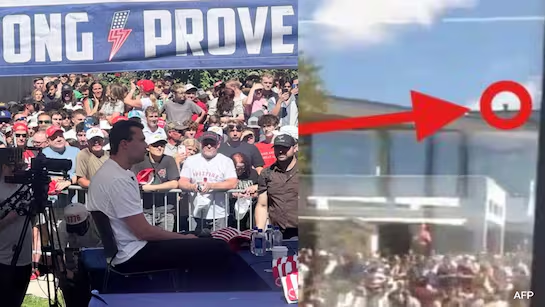
The world was shocked when news broke about the Charlie Kirk shot video. Charlie Kirk, a well-known conservative political activist, was speaking at Utah Valley University in September 2025 when a gunman opened fire. The incident instantly grabbed attention not just for the tragedy but for the fact that multiple videos captured the moment. These videos spread quickly across social media platforms, sparking debates, conspiracy theories, and intense public interest.
The video of Charlie Kirk being shot circulated widely because the event was public, attended by thousands, and captured on smartphones. People watching the video saw chaotic scenes of panic, emergency responders rushing to help, and the immediate reaction of the audience. While some clips were graphic, others only showed partial angles, which added to confusion and curiosity.
This blog post dives deep into the Charlie Kirk shot video, explaining the event, why it went viral, the aftermath, and the broader implications of viral shooting footage. It also aims to provide reliable and clear information for readers who are trying to understand what really happened, separating fact from speculation.
Who Is Charlie Kirk and Why Was He Speaking at Utah Valley University?
Charlie Kirk was a prominent figure in U.S. conservative politics. He co-founded Turning Point USA, an organization that promotes conservative values among students. Over the years, Kirk gained national attention through speeches, interviews, and social media, often engaging in heated debates about politics and culture. His influence made him a recognizable name, particularly among young conservatives and activists.
On September 10, 2025, Kirk was invited to speak at Utah Valley University. The event attracted a large audience of students and community members, drawn by his reputation as a speaker and political influencer. The lecture focused on topics including political activism, free speech, and leadership, which made the public eager to attend. Unfortunately, this event also became the setting for the shooting incident.
Quick Info Table – Charlie Kirk Background
| Detail | Information |
|---|---|
| Full Name | Charlie Kirk |
| Profession | Political Activist, Author, Commentator |
| Organization | Turning Point USA |
| Notable Influence | Youth political engagement, conservative media presence |
| Event Date of Shooting | September 10, 2025 |
| Location | Utah Valley University, Orem, Utah |
What Happened When Charlie Kirk Was Shot (Video Descriptions)
The Charlie Kirk shot video captured the terrifying moment when the gunman fired at Kirk during his speech. In the footage, the audience can be seen reacting immediately — some ducking for cover, others screaming or attempting to flee. Emergency responders rushed onto the stage, trying to provide aid as the event spiraled into chaos. Different videos captured various angles: some focused on the stage, while others showed the panic in the crowd.
Many people who watched the video were disturbed by the graphic nature of some clips. While the videos did not always show the full scene, even partial footage was enough to spread fear and concern online. Witness videos often differed from news coverage, showing raw reactions and unedited sequences, which contributed to the video’s viral nature. The presence of multiple cameras and smartphones made it one of the most widely shared shooting videos in recent memory.
Quick Info Table – Video Details
| Aspect | Details |
|---|---|
| Event Captured | Shooting incident during Kirk’s speech |
| Video Sources | Audience smartphones, media coverage |
| Type of Footage | Raw eyewitness clips, partial angles, news broadcast snippets |
| Spread | Viral on X, YouTube, TikTok, Instagram |
| Viewer Reaction | Shock, panic, debate about graphic content |
Why the “Charlie Kirk Shot Video” Went Viral on Social Media
The Charlie Kirk shot video went viral primarily because it was captured live during a public event. Thousands of people attended the speech, and multiple smartphones recorded the incident from different angles. Social media algorithms amplified the video, as people shared it out of shock, curiosity, and concern.
The rapid spread was also fueled by platforms’ autoplay features and trending recommendations. Clips of the video appeared across X, TikTok, Instagram, and YouTube, sometimes before viewers knew the context. Public reaction ranged from sympathy for Kirk to debates about gun violence and political safety, making the video one of the most widely discussed incidents of the year.
Social Media Policies and Content Moderation Around the Video
Social media companies responded quickly to the viral Charlie Kirk shot video. Platforms like TikTok, YouTube, and Meta placed warnings on the content, added age restrictions, and in some cases, removed the most graphic clips. The goal was to prevent trauma or misuse while allowing verified news coverage to remain accessible.
This incident reignited discussions about content moderation. Some argued for immediate removal to protect viewers, while others stressed the public interest in sharing factual footage of important events. The video’s virality highlighted the ongoing challenge platforms face in balancing free information with safety and ethical responsibility.
The Aftermath — Investigation, Suspect, and Public Safety
Following the shooting, authorities launched a thorough investigation. A suspect was identified, arrested, and charged in connection with Kirk’s death. Law enforcement relied on eyewitness videos and security footage to track the suspect and reconstruct the incident. The public was urged not to share graphic footage irresponsibly, as some clips contained sensitive information that could interfere with the investigation.
The shooting also triggered heightened security measures at public events and university campuses nationwide. The Charlie Kirk shot video played a role in both informing the public and prompting discussions about safety, highlighting the growing impact of real-time video evidence in law enforcement and public awareness.
Common Questions About the “Charlie Kirk Shot Video”
1. Is the video graphic?
Yes, the video is graphic. Some clips show panic and chaos, but the most extreme visuals were restricted or removed from most platforms.
2. Where can people watch the video?
Due to its sensitive nature, many platforms restricted or removed the full video. Only news organizations have limited coverage clips.
3. How many versions exist online?
Multiple versions exist, including raw eyewitness clips, partial angles, and edited news coverage.
4. Why are there conflicting claims about the footage?
Different videos captured different perspectives. Some edited clips caused confusion and misinformation.
5. What should viewers know before watching?
Be aware it is disturbing. Approach clips carefully, preferably from verified news sources.
Broader Impact of Viral Shooting Videos on Society
Viral shooting videos like the Charlie Kirk shot video have changed how the public consumes news. Smartphones allow real-time footage to spread instantly, increasing awareness but also raising ethical concerns. Watching such content can be traumatic, and there is an ongoing debate about balancing transparency with viewer safety.
Experts note that videos of violent incidents can influence public opinion, political debates, and even legislation. They stress the importance of responsible sharing, critical evaluation of content, and awareness of mental health effects. The Kirk video serves as a case study for how society and media platforms navigate real-time documentation of tragedy.
Conclusion
The Charlie Kirk shot video is a sobering reminder of how quickly tragic events can spread in the digital age. It illustrates the power of social media, the ethical challenges of sharing graphic content, and the importance of verifying information. By understanding what happened, the role of video footage, and its broader impact, readers can approach such incidents with awareness, empathy, and responsibility.
Read more: Storm Over the Strait: trump iran news and the Unraveling of a Fragile World Order