


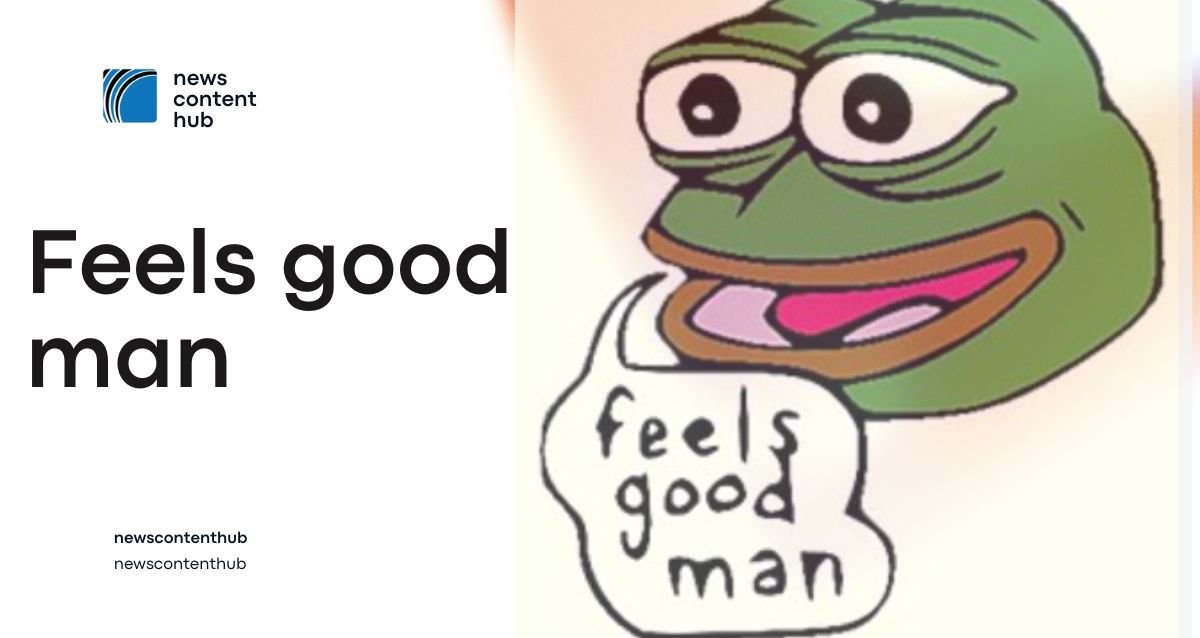
The meme travels to the internet as a cultural phenomenon, and the journey isn’t complete until more than a frog cartoon is added to the mix. Once it was just a simple catchphrase in an underground comic, it became one of the most discussed images of the internet today. The feels good man meme has thus become more than just a punchline, it’s been a phenomenon affecting everything from art to politics and the weirdness of the Internet. In this article, we will follow the story of the development of this meme, recall how it got its name, and discuss the film of the same name.
Table of Contents
What is the Feels Good Man Meme?
The essence of the feels good man meme is the Pepe, a relaxed cartoon frog developed by artist Matt Furie. The phrase “feels good, man” first appeared in Furie’s comic strip “Boy’s Club”, when it was uttered after a dull moment. This was a relatable statement made by that guy that got into people’s heads, and I could imagine it making its way through 4chan and MySpace forums, and other hangout spots in the early days of the internet. The simplicity of editing and its adaptability, made the image a playground for people to manipulate and give him almost every expression they could think of.
The story of Pepe’s beginning
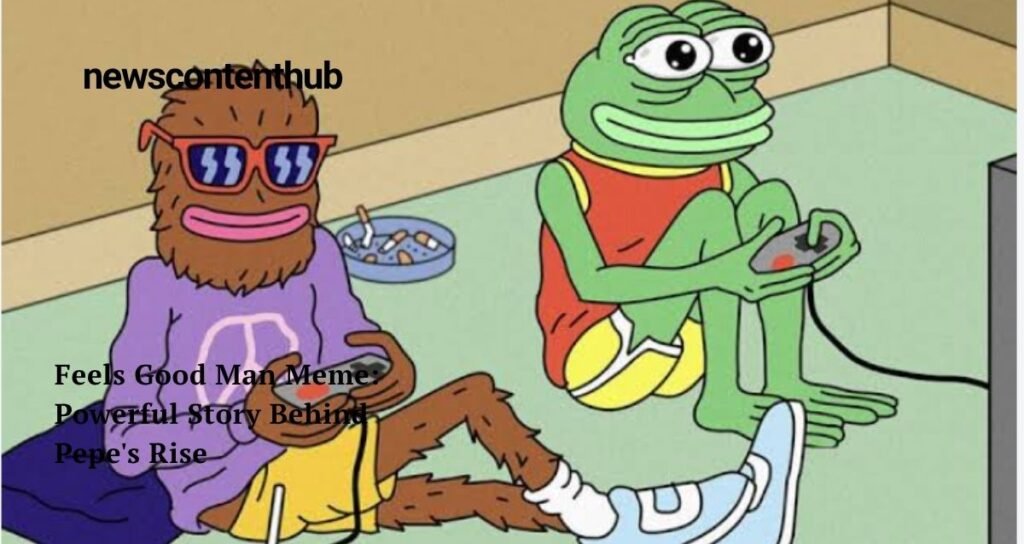
Pepe was created by Matt Furie in 2005 as one of four characters in the comic “Boy’s Club”, which chronicled the relaxed lives of young male college friends. Pepe embodied a laid back, stonerish persona and his signature phrase was the basis for a later feels good meme. Furie had no intention of making Pepe a political icon and his original comic contained nothing but absurdist gags.
How the Meme Spread Online
However, Pepe’s image soon went viral and surfaced in internet forums where users began to remix him endlessly. Early adopters changed the character into “sad frog” and “smug frog” and many others, keeping the original “feels good man” meme phrase on some of the versions. With this came the ability of people to use Pepe as a flexible emotion shortcut, which they could use in chat rooms, image boards, and early social media.
Here is a summary of Pepe’s Meme History
If you just need a visual reference, here’s a table of the main milestones related to the feels good man meme.
| Year | Milestone | Significance |
| 2005 | Boy’s Club comic debuts | Pepe and the original catchphrase are introduced. |
| 2008–2010 | Meme goes viral on forums | Pepe becomes increasingly popular across internet forums. |
| 2015–2016 | Pepe is appropriated by politics | Pepe is adopted by elements of the alt-right, changing the meme’s public image. |
| 2016 | ADL names Pepe a hate symbol | Pepe makes the news in a new and controversial way. |
| 2019 | Furie settles lawsuits | Creator Matt Furie regains some control over his character. |
| 2020 | Feels Good Man documentary releases | The documentary chronicles the meme’s transformation and Furie’s efforts to reclaim Pepe. |
The feels good man meme didn’t remain unchanged for long as you can see from the table above. Rather, it was a series of stages that each one transformed the public’s perception of the character.
The Feels Good Man Meme has become a meme that has a controversial history
In around 2015, the feels good man meme started to get darker as some online communities started to use Pepe’s image in extreme and hateful wording. The association, however, persisted and soon mainstream media outlets started reporting about Pepe’s association with the Alt Right movement, though Furie has never endorsed this change. This led to the Anti-Defamation League declaring Pepe a hate symbol in 2016, forever changing the public’s perception of the character.
Many fans of the game who recall the feel good man meme as a lighthearted internet joke were upset by this change. However, after the story was picked up by the mainstream media, it became harder and harder to tell the original story from the appropriated one. Hence, it’s important to know about this history and to appreciate the benign nature of the meme and its subsequent unfortunate use by hate groups.
The fight to reclaim his creation is Matt Furie’s
Matt Furie chose not to take the abuse of Pepe’s reputation, but to retaliate. He filed lawsuits against several people and organizations for using his likeness without his consent, including an antitrust lawsuit against conspiracy theorist Alex Jones. These initiatives were aimed at raising the awareness of the public that the feels good man meme was originally a humorous concept, and not a hateful one.
The “Feels Good Man” Documentary
In 2020, directors Arthur Jones and Giorgio Angelini created a documentary titled ‘Feels Good Man’ that chronicles this entire saga. The film follows as Furie tries to take back his own art, but also explores how art can be changed forever without his consent by internet culture. Many people will learn about Pepe’s history for the first time from this famous movie rather than from the internet itself, since the film’s title matches the meme’s.
Feels Good Man Meme In Pop Culture Today
Now controversial but still continuing to branch out in strange directions, the feels good man meme is continuing to evolve. Later, in the cryptocurrency community, Pepe was used to make Pepe-branded cryptocurrencies, further adding to the character’s cultural impact. Furthermore, certain activists and regular Internet users have attempted to reclaim Pepe for good purposes; he was used by some in pro-democracy demonstrations in such locales as Hong Kong.
In the meantime, users of the net still refer to the original feels good man meme in its purest form, sharing nostalgic versions prior to any political baggage. So Pepe’s legacy is very real and very divided, as far as one Internet community is concerned versus another.
Restoring the efforts of the world
Pepe’s image had a completely new significance during the pro-democracy protests, when anti-state protesters used the Pepe’s face as a symbol of resistance and not hate. This bizarre twist is a testament to how quirky meme evolution can get when an image goes “rogue.It’s a rather peculiar twist, and it shows just how unpredictable memes can get when an image gets away from the creator. Thus, the feels good man meme has come to have drastically different meanings in different geographic and political regions.
Reading & Understanding the Feels Good Man Meme
In addition to its specific history, the feels good man meme provides more general insights into the way digital culture works. First of all, it highlights the need to understand how fast the original context of an image can be lost, as soon as it enters the communication arena of more than one online community. Secondly, it draws attention to the conflict between the producers and consumers who transform the producer’s production without authorization.
More than that, this meme exemplifies how the mainstream media can fast-track a symbol’s evolution and sometimes fix on evolution in such a way that it becomes a meaning that trumps its original, more wholesome one. Thus, the feels good man meme has become a pedagogical tool for many media literacy educators to discuss the issue of online misinformation and appropriation of symbols.
Making a responsibly informed discussion about the Feels Good Man Meme
Clearly, with a history as complicated as this, it’s important to take the feels good man meme with a grain of salt. It’s good to accept the risqué, funny origins of the meme and its overuse by malicious groups. Neglecting either half of that story is to miss the mark on a very complicated cultural phenomenon.
Plus, if you are trying to get a balancedview on this meme, you can use the “Feels Good Man” documentary as a reference. The film includes interviews with Furie himself, as well as with journalists and extremism researchers, so that it isn’t just a one-sided story.
The Feels Good Man Meme is compared to other internet icons
This “feels good man meme” is one of those most unusual memes that happen to be viral in the internet because of its unusually dramatic transformation when compared to other viral internet characters. While most memes slip away gently after their brief rise to fame, Pepe had a different kind of story: he went from a comedy forum to the national news. This meme is not as simple as other reaction images, it had historical significance, because it entered politics and not just entertainment.
Also, there are few other internet icons that have come up with a feature-length film that explores their cultural trajectory. This is just one reason that when it comes to the topic of online symbols that can get away from the creator, researchers and journalists still talk about the feels good man meme. So, when we compare Pepe with other memes, we can get an idea of just how rare the situation here proved to be.
The role of anonymous forums in creating a meme
The imageboards were significant in the rapid spread and evolution of the feels good man meme, and remained anonymous. These sites enabled people to post without identifying information, leading to communities forming inside jokes and shorthand that was hard for outsiders to understand. So Pepe was already part of these subcultures before he was ever seen by “the public”.
This anonymity also helped to make it difficult to determine who was the first to give the character more political nuances. Tracking accountability was difficult because of its structure and also helped fuel the spread of the darker turn of the feels good man meme, as the meaning of its turn was ambiguous. This online infrastructure helps to explain the meme’s unusual journey from its path to controversy.
Media Coverage and Public Perception
Public opinion quickly and drastically changed once the mainstream media reported on Pepe’s political connections. A really complex history of the memes was sometimes reduced to smaller, simpler stories for the general public. Therefore, for many people the feels good man meme was only ever known by people looking at headlines about extremism, rather than its original comedic context.
This exclusion of material did not sit well with the older fans, who were upset that the people who had been so fond of them were being left out of the film because the story was getting too narrow and sensational. Meanwhile, internet culture writers and others voiced their concerns about political appropriation, saying that it had real-world implications and that it could not be ignored. Making up these competing narratives is a continuous struggle in the narrative of the feels good man meme today.
What can be gained from Furie’s experience?
The Pepe experience is a good lesson for other artists whose art may be suddenly subject to a viral trend. First, it’s important to recognize that no matter how the creator intended for their image to be used, once it’s in the hands of a lot of people on the web, it’s hard to control its meaning. Secondly, while litigation can sometimes work, it is usually time-consuming, costly, and stressful.
In addition, however, Furie’s decision to continue producing new and wholesome Pepe content shows one way to repair a tarnished public reputation. Instead of giving the character up altogether, he kept on creating Pepe’s kids books/merchandise that matched his original personality, which was very gentle. This is a potentially optimistic model for other artists in similar predicaments with the feels good man meme or any other viral moment.
The business side of Pepe’s Legacy
Matt Furie has even gone on to commercially exploit Pepe himself, making children’s books and t-shirts, which focus on Pepe’s original and wholesome personality. This is a conscious attempt to re-market the previous “man who wants to do good” side of the “feels good man” meme. Besides, the deal on the license and legal settlements have brought some money to Furie from a character he didn’t control much.
This means that at times, creators can still profit from the meme lifestyle, even after they lose their initial control of their IP. This factor compounds the feel good man meme saga, as it brings together the legal approach with cultural reclamation.
Wrap-up of the Feels Good Man Meme
In the end, the ‘feels good man’ meme is one of the most interesting Internet stories of image propagation, mutation and evolution of meaning over time. From an obscure line in an independent comic to a worldwide symbol, caught between wholesome nostalgia and troubling political appropriation. Matt Furie’s continuing attempts to “save” his creation demonstrate that creators are not helpless against the forces of internet culture. You may have met Pepe for the first time through the wonderful documentary or through the nostalgic forums; Pepe’s story continues.
A Balanced Way to Remember Pepe
Looking back, the fairest way to discuss the feels good man meme involves holding two truths at once. The character began as an innocent, funny expression of laid-back college life, and that original spirit still resonates with longtime internet users. At the same time, its later exploitation by hateful groups caused genuine harm and confusion that cannot simply be brushed aside.
Responsible discussions should always include both chapters of this story, honoring Furie’s original creative vision while acknowledging the real damage caused later.
Frequently Asked Questions FAQs
Q1: Who created the feels good man meme?
Cartoonist Matt Furie created the original character and catchphrase in his 2005 comic series “Boy’s Club.”
Q2: Why is Pepe the Frog considered controversial?
Pepe became controversial after extremist online groups adopted his image for hateful and political messaging around 2015.
Q3: What is the “Feels Good Man” documentary about?
The documentary follows Matt Furie’s efforts to reclaim Pepe’s image after it became associated with hate speech online.
Q4: Is the feels good man meme still used today?
Yes, many internet users still share nostalgic, non-political versions of the meme across social platforms and forums.
Q5: Did Matt Furie take legal action over his character?
Yes, Furie pursued several legal cases, including one against conspiracy theorist Alex Jones, to reclaim control over Pepe.
Q6: Is Pepe the Frog officially classified as a hate symbol?
The Anti-Defamation League added Pepe to its hate symbol database in 2016, though usage varies widely by context.
Q7: Where can I watch the Feels Good Man documentary?
The documentary is available for rental or purchase on several major streaming platforms, including Prime Video.


