


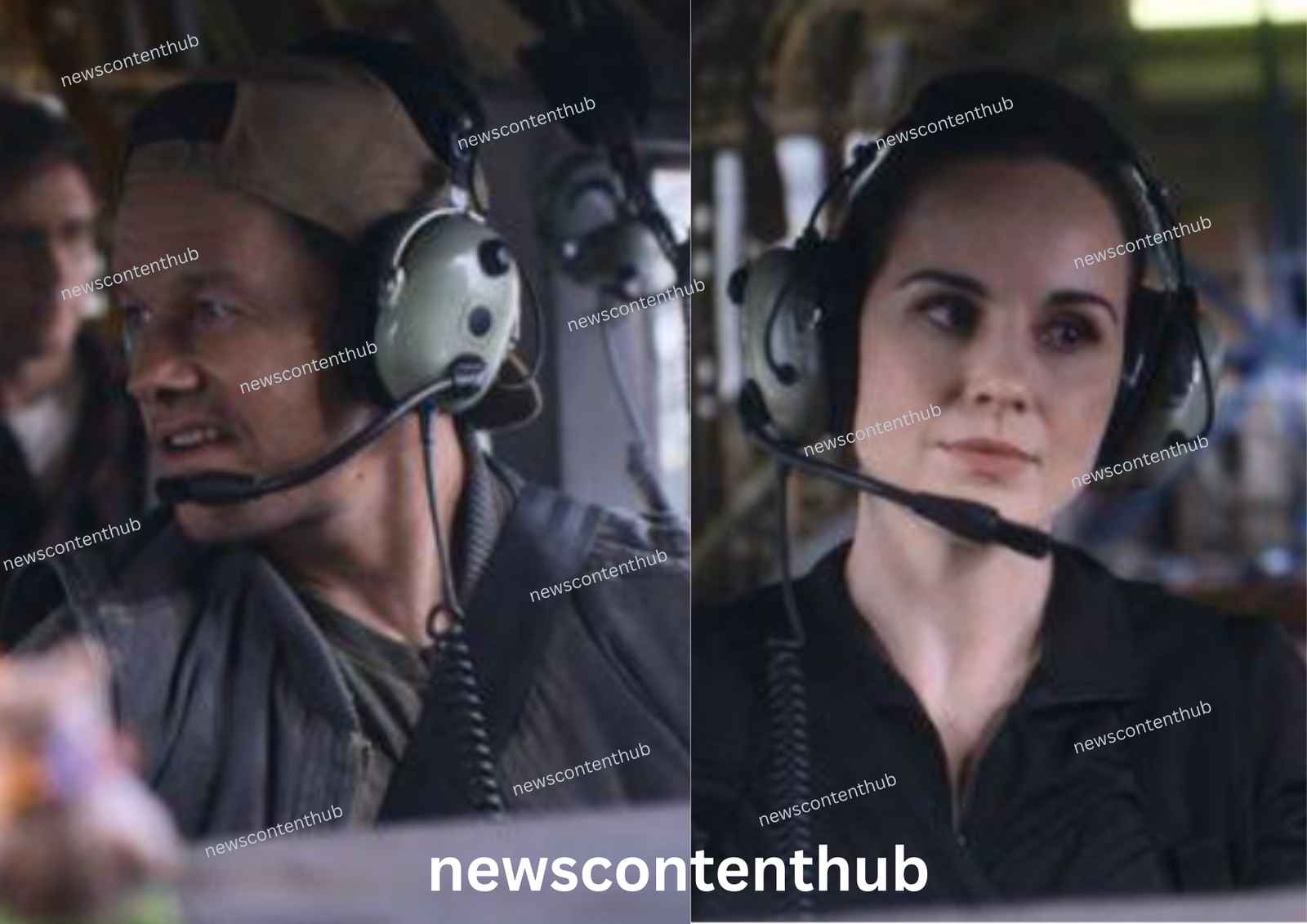
Mel Gibson’s Flight Risk is a confluence of action, betrayal and claustrophobic tension in a small plane soaring over Alaska. This thriller was released on January 24, 2025 and was Gibson’s first directorial venture since Hacksaw Ridge, where he worked with long-time partner Mark Wahlberg. This article covers the events, cast, production details and critical reaction of Flight Risk to provide a full picture of the reasons behind the pre-release buzz of this contained thriller.
Table of Contents
The movie Flight Risk is about what?
The plot of Flight Risk is simple: small plane pilot Daryl is hired to take an Air Marshal and a fugitive across the wilds of Alaska. But the pressure quickly mounts when passengers start to suspect that their pilot might not be who he says he is. Flight Risk is a story that is mostly confined to the interior of a cramped aircraft cabin, and as such emphasizes building up the tension rather than the action itself. As such, the movie is a walled-off suspense thriller driven by paranoia, changing alliances and uncertainty about who’s to be trusted.
Flight Risk itself was called a ‘tight thriller’ by Gibson who said it was constructed ‘almost from start to finish in real time’, playing with some of his audience’s ‘fears about flying’. This was a method in which the production maintained real tension, with minimal set changes, as the performances were the key and pacing was tight and controlled throughout.
The Cast is bringing Bring a Flight Risk to life!
Mark Wahlberg’s Demons Makeover
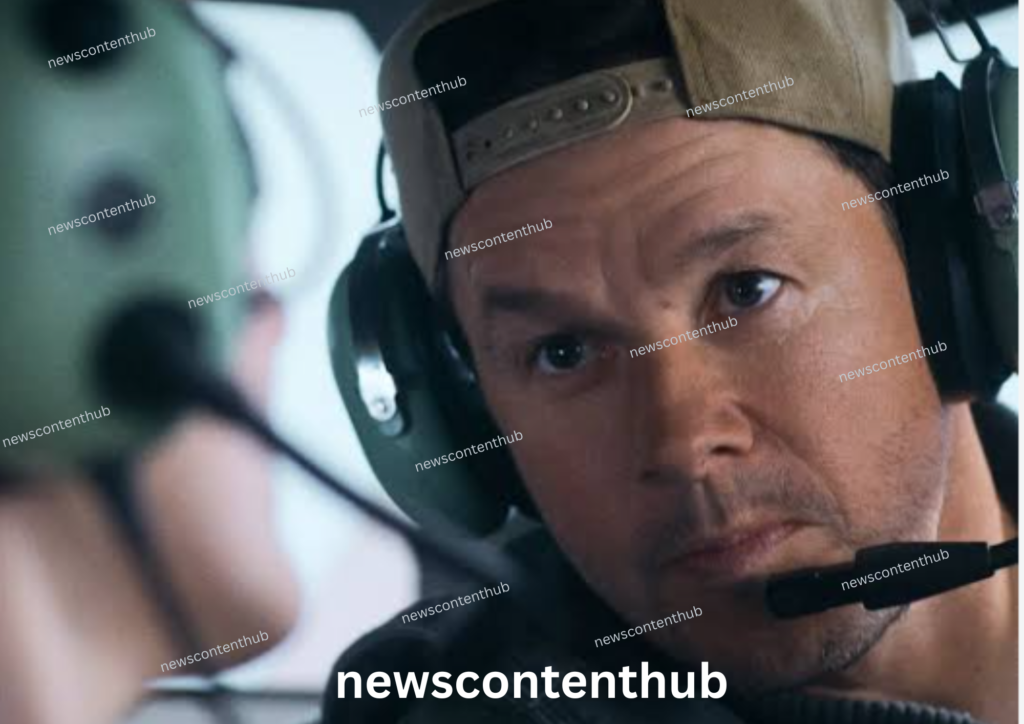
Mark Wahlberg gave his character, Daryl, a completely different performance in Flight Risk, portraying him as a bald, irrational and subtly menacing enemy. During filming, reportedly Wahlberg shaved his head each day to bring the whole character change to life. This villainous performance in Flight Risk was bound to raise some eyebrows, since audiences are usually enticed to see an actor like Wahlberg in a heroic role or comedy.
Michelle Dockery and Topher Grace
Madolyn (Michelle Dockery) is the Air Marshal tasked with bringing a potentially lethal fugitive to trial in a film that’s fraught with suspense. Topher Grace stars as Winston, the fugitive who’s testimony will uncover a lot of serious criminal activity that is tied up in organized crime. These three performers are the sole ones who deliver almost the entire story of Flight Risk, with supporting characters limited within this deliberately contained approach to storytelling.
Balancing Insanity with Science: Production Details Behind Flight Risk
Below is a summary of important production information about Flight Risk to quickly get readers up to speed on the background & creative team behind the project.
| Detail | Information |
| Director | Mel Gibson |
| Writer | Jared Rosenberg |
| Release Date | January 24, 2025 |
| Distributor | Lionsgate |
| Running Time | 91 minutes |
| Setting | Alaskan wilderness |
| Additional Directors | Sophie Hermann-Keller and others |
| Additional Writers | Sophie Hermann-Keller and others |
The run time was relatively short compared to most modern thrillers, as the table shows, helping to maintain Flight Risk’s tight and contained narrative structure. This brisk tempo required that every scene move toward raising the suspense and not provide “padding” material.
The dangers and difficulties faced by a flight crew
Filming in Times of Industry Disruption
Flight Risk was produced at a time of major turmoil within the entertainment industry that was linked to the current Hollywood entertainment strikes. The production was said to have gone ahead via official waiver as the industry was in overall uncertainty at the time. Given these conditions, cast and crew had to operate under pressure as they wrapped up Flight Risk on a tight schedule.
Gibson’s Return to Directing
The project was Gibson’s sixth as a director in something under 30 years spanning from his acclaimed Braveheart to The Passion of the Christ. Since Flight Risk was his debut since 2016 as a director, the question was raised whether Gibson could regain the momentum he had as a director. The small-scale suspense narrative was watched with interest, as people wondered whether there would be significant differences between this and his previous, bigger historical epics.
Themes explored as part of Flight Risk
Trust and Paranoia
But the question is in the air, who can really be trusted in the perilous journey that has begun—who really deserves to be a part of Flight Risk? The motives behind the pilot are initially unknown to audiences, and not even the pilot himself knows them, causing audiences to feel as frightened as the trapped passengers. This erosion of trust is ongoing, so that a single encounter can uncover ulterior motives or even deadly secrets.
Survival Under Extreme Pressure
Moreover, Flight Risk explores the ways in which common workday duties become a matter of life and death. But as Madolyn faces unforeseen betrayal at high elevation, her rigorous law enforcement training is put to the test. This thematic investigation brings out the tension amidst real psychological stakes for its characters, moving beyond action spectacle.
The film Flight Risk is a critical reception.
Flight Risk was met with mixed reviews at the time, as a number of critics wondered if the premise the whole film stuck to was truly tense throughout. Though some critics hailed Wahlberg for his committed villainous performance, others complained that the plot suffered from too much of an old-fashioned genre approach. The critical response to Flight Risk was, therefore, much more polarized and polarizing, as compared to Gibson’s earlier, more acclaimed, directorial efforts.
Although it wasn’t universally liked, there was a great deal of curiosity for the audience because of the combination of Gibson helming Wahlberg in an atypical villainous role. The movie grossed moderately in the box office, proving that being a star could be able to create a substantial opening weekend interest. However, critical consensus indicates that Flight Risk has to be considered as simple genre entertainment, rather than prestigious filmmaking.
Flight Risk’s similarities to other aviation thrillers.
Genre conventions and influences are discussed
The film is the latest in a long line of aviation thrillers that make maximum use of tight quarters to build up tension for much of the film. Previous movies such as Non-Stop and Plane dealt with similar themes, but kept the audience in a perilous situation while in flight. What sets Flight Risk apart, however, is its location, in remote Alaska, where there is an additional level of danger beyond just the airborn elements.
It’s an original thriller.This is an original thriller
The film is very different from similar movies, in that it does not feature many large action scenes but focuses on the psychological manipulation of the characters throughout the majority of the film. This measured style allows for the tension to escalate through dialogue and subsequent power struggles, instead of continuous drama. The move was seen as a creative asset and a slight flaw in the story by critics when comparing the film with its genre counterparts.
The box office performance and commercial impact of the films
Flight Risk’s theatrical debut was marginally successful, but not a great blockbuster story. The film’s performance at the box office was in line with that of the typical mid-budget thriller that hits theaters in a tough January opening-up period. Yet the two actors, Gibson and Wahlberg, created enough buzz to yield a solid opening weekend, even with the film’s lukewarm overall critical reception.
The thriller’s audience was then greatly extended as streaming and home video came along. The film was widely readied for digital release, and many viewers found it through this route, finding its quick pace and the film’s relative ease of 90-minute viewing to be welcome.
Behind the Camera: Cinematography and Visual Style
The Alaskan Wilderness captured in photos.
Filming under these dramatic, harsh conditions in Alaska raised special challenges for the cinematographers who had to shoot without the loss of continuity. The outdoors of the aircraft cabin is tightly shot, contrasting against wider shots of snowy mountains and woods. This visual contrast serves to emphasize the main conflict of the story between this immense, unfeeling wilderness and the intense, life-or-death struggle in such a limited space.
The production team had to be creative when it came to keeping the story interesting and entertaining given the fact that much of the story is about inside a small plane. Given the space constraints of a film set, character perspective was clearly conveyed through the careful placement of the camera and light set-up. This technical difficulty eventually formed a significant part of the film’s unique visual style for the duration of the movie.
The difference between Practical Effects and Digital Enhancements.
The creation was a balance between the practical aerial photography and digital effects work required to convey more hazardous flight sequences in a safe manner. Stunt coordinators closely worked with visual effects teams to guarantee action scenes would not appear clearly staged. It was a blend of practical and digital methods that kept the tension while not compromising on safety when it came to the physically challenging production needs.
The ability to create music and sound design
To create tension through sound
A lot of the suspense was achieved by the use of sound design when the majority of the scenes were limited to a single, small location. A few audio cues and a change of emotion levels between characters were signalled by the engine noise, wind, and a change of emotion levels between characters (not just dialogue). This focus on the sounds of the atmosphere meant that there were moments when there was little action on screen but still felt genuinely unsettling.
Composer Contributions
The film’s musical score was also restrained, relying on minimal instrumentation to build tension as the story went on and escalating paranoia, instead of relying on orchestral swells to build up the impact. The measured approach matched the gradual ‘slow burn’ of the story, with tension building up slowly instead of being alerted to by the typical musical cues. This measured approach to scoring was seen as a fitting accompaniment to the film’s overall ambience by critics.
Marketing Strategy and Promotional Campaign
Trailer Release and Early Buzz
Lionsgate upped its promotional efforts during the middle of 2024, and had a number of trailers that highlighted Wahlberg’s dramatic transformation for the part. The marketing materials put extra emphasis on the unique team of Gibson directing his regular collaborator in an unusual context of a bad guy. This decision sparked a lot of chatter on social media well in advance of the film’s actual release date.
Raising awareness for the building through casting interviews
Also, there were promotional interviews with both Gibson and Wahlberg discussing their relationship which helped fan excitement for their previous collaborations. Wahlberg was candid about his enjoyment of playing a character that wasn’t quite as heroic as some of his other roles over the years, and he said he’s really happy to do this. Such marketing campaign paid off, as the movie became a noteworthy reunion between two proven Hollywood partners.
The Alaskan Setting as a Character Itself
Environmental Danger Beyond the Plot
The Alaskan wilderness plays more than a background role in the drama that unfolds, it’s an extra antagonist. The three main characters already have a psychological strain, and the adverse weather, combined with the isolation of their location, exacerbates the situation. Given the situation, it is impossible to rescue or escape, so characters will have to overcome their problems solely by their own ingenuity and determination.
Filming Location Realities
Some sequences were filmed in the Alaskan wild, but others were shot in the soundstage to ensure harsh weather and lighting were controlled during production. This ‘hybrid’ method enabled film makers to achieve an accurate environmental texture and still provide them with the technical control needed to achieve complex technical requirements. The challenge for movies set in extreme environments is to balance the authenticity of the location with the production’s practicalities.
Participants will receive a link to log in to the online community for discussion
Responses from fans to Wahlberg’s transformation.
When the film came out, social media comments focused mainly on the stark contrast between the way Wahlberg looked in the movie and his more fearsome portrayal. There was a lot of astonishment about how convincing he looked as being another character, rather than the one he normally plays. This reaction was a good proof of the effectiveness of the kind of marketing materials that had been prepared for the audience to make a choice that really would change their lives.
Ongoing Genre Discussion
In addition to personal reactions, forums for fans of action movies perched at the edge of aerial adventure kept discussing the position of the film in the range of parochial aviation thrillers. People thought it was very well-paced and that the characters were true to themselves in some places, but for others, the narrative’s main moves were held up as they felt some things were happening that were stretching the truth at a crucial moment. The critical reaction to this release was divided and this discussion is a testament to that.
Legacy and future prospects,
Gibson’s Ongoing Director’s Interest
After this project, it was rumored that Gibson would go behind the camera again and work on a few more films. With his successful genre filmmaking, it was suggested that he could continue to do so in conjunction with his historical epic work. This possibility of creativity is an interesting subplot to the larger story of his continued filmmaking career.
Wahlberg’s Villain Era
In the meantime, Wahlberg’s openness to taking on some nontraditional nefarious roles could indicate that he is looking to branch out from his more heroic roles in the future. Sometimes an actor is cast as a role that changes them in some way to show the audience that he or she is capable of more than the typical role and can begin to explore other kinds of future roles. This show will very likely be closely followed by industry observers as to whether it will affect his future casting prospects during his continued career.
The following are some key points to remember regarding flight risk:
Flight Risk is the first film he has directed since Hacksaw Ridge in 2016.
Throughout this tightly plotted aviation drama, Mark Wahlberg plays an unexpectedly villainous pilot.
The narrative is developed mainly inside a small plane flying over the wilderness of Alaska.
Audience interest led to fair at the box office, and if interest in this type of work is a worthwhile measure, then, for the most part, the critical response was mixed.
Flight Risk falls into the larger genre of confined space aviation thrillers.
Final Thoughts
Mark Wahlberg’s performance as an unsettling villain (under Mel Gibson’s direction) keeps Flight Risk firmly contained, and it’s an unsettling experience. The movie is extremely fast-paced and casting unusual, though critical reception was split, there was some curiosity in genre circles. From the time of its theatrical release, or perhaps acquired later via streaming services, Flight Risk is a tense, briskly going reminder that even at the greatest altitude, trust can be misplaced.
Frequently Asked Questions FAQs
Q1: When was Flight Risk released in theaters?
The film premiered nationwide on January 24, 2025, distributed through Lionsgate after extensive promotional trailers throughout 2024.
Q2: Who directed Flight Risk?
Mel Gibson directed the film, marking his sixth directorial effort and first project since 2016’s Hacksaw Ridge.
Q3: What role does Mark Wahlberg play in Flight Risk?
Wahlberg plays Daryl, a seemingly ordinary pilot who reveals himself as a dangerous, unpredictable antagonist during the flight.
Q4: Is Flight Risk based on a true story?
No, Jared Rosenberg wrote an original screenplay for Flight Risk rather than adapting real events or documented incidents.
Q5: How was Flight Risk received by critics?
Critical reception remained mixed, with reviewers praising individual performances while questioning whether the premise sustained tension throughout.


