


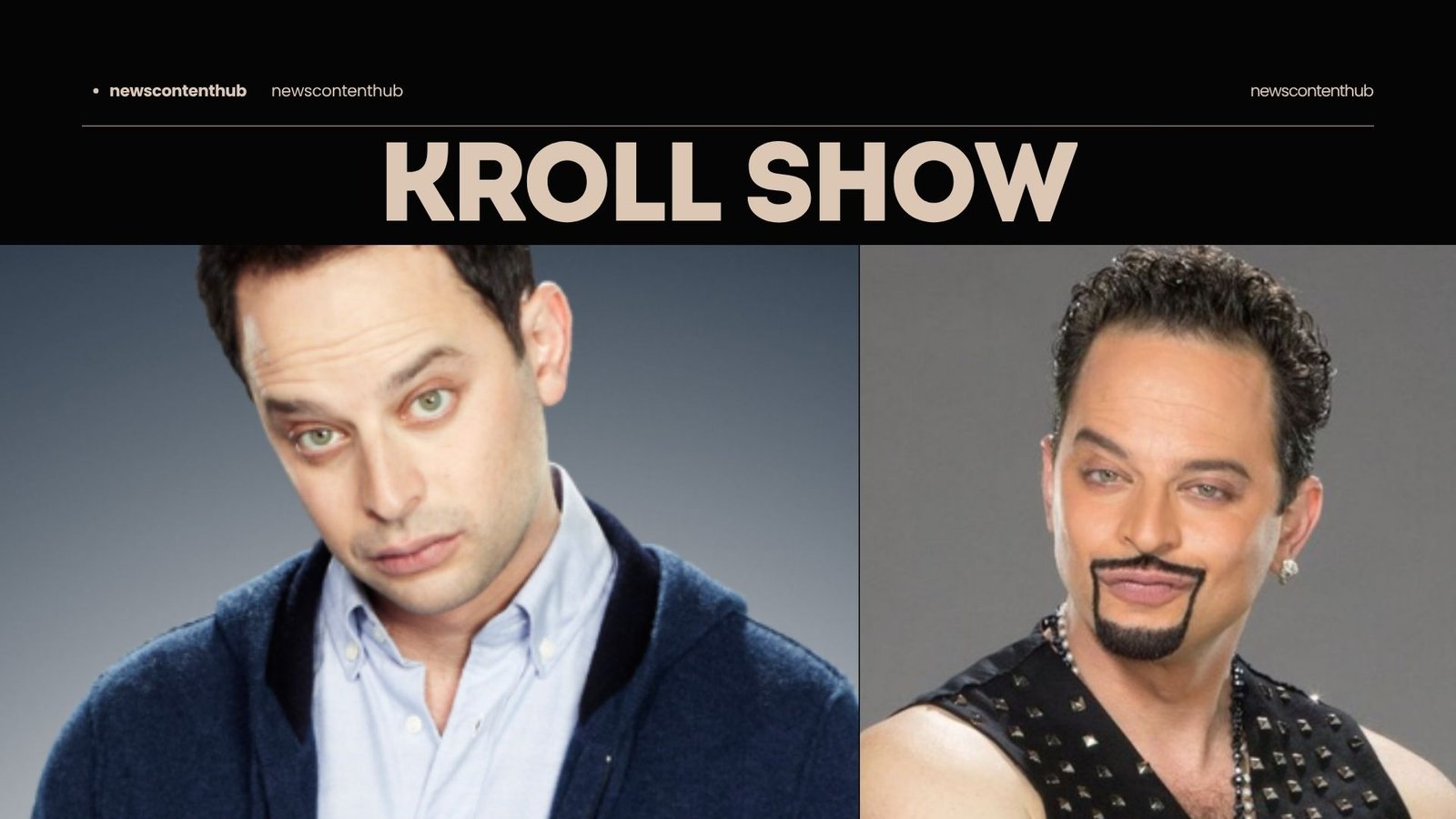
Kroll Show is one of those shows that gets underappreciated every time it’s mentioned about the top 10 sketch comedy of the past 10 years. Nick Kroll created a whole weird world on three seasons of Comedy Central. Kroll Show, however, never had the mainstream success or acclaim of Saturday Night Live or Key and Peele in its original incarnation.
As a result, many comedy buffs missed one of the most innovative sketch forms to hit TV in years. From its beginnings to its most iconic characters, this article explores all the things you need to know about Kroll Show. The format and the highlights of the sketches, as well as the reasons for the series’ continued relevance, will be discussed. At the close you will realize just why Kroll Show is worth a second viewing.
Table of Contents
What Is Kroll Show?
Kroll Show is essentially a sketch comedy show that was produced by and star-casted by comedian Nick Kroll. It first aired in Comedy Central in January 2013, for three seasons, and ended on March 2015. It wasn’t a sketch format like regular comic books, but many of the characters reoccurred and they had a lot of storylines that connected. So, binging on an entire season was kind of like watching a disconnected series of comedy skits, rather than a continuous story.
The series is the brainchild of Nick Kroll, who co-wrote it with Jonathan Krisel and John Levenstein, who had both acumen in their comedic execution from other successful shows. Most episodes were directed by Krisel, who gave the show a unique graphic aesthetic and more of a sketch programme than other programmes of the time. In doing so the series was able to lampoon reality TV, nightlife culture, and internet addiction without resorting to being just a ‘parody show’.
The origins and format of Kroll Show.
It is important to first grasp how the show’s episodes are structured as opposed to its competitors before creating individual sketches. The episodes were about 21 minutes long each and contained several character segments, all contained in a compressed comedic package. Furthermore, storylines often connected between episodes, leading the viewers to watch along with specific characters throughout a season instead of watching as discrete pieces.
The format was unusual for a TV series and distinguished this show from shows such as Saturday Night Live, which usually have a weekly format. Rather it was Kroll Show’s building of the narratives for characters such as the PubLIZity publicists or the Rich Dicks crew, which provided fans with a weekly reason to come back. The show thus paid off on character development for those who followed the show episode by episode, and not so much for those who just tuned in from time to time.
The world of fictional characters and sketches
Featuring three seasons, the series had a number of recurring characters, each providing a different comedic take on contemporary life. These characters formed the backbone of Kroll Show and continue to be the most referenced aspect of the show today.
What is PubLIZity and the Liz Duo?
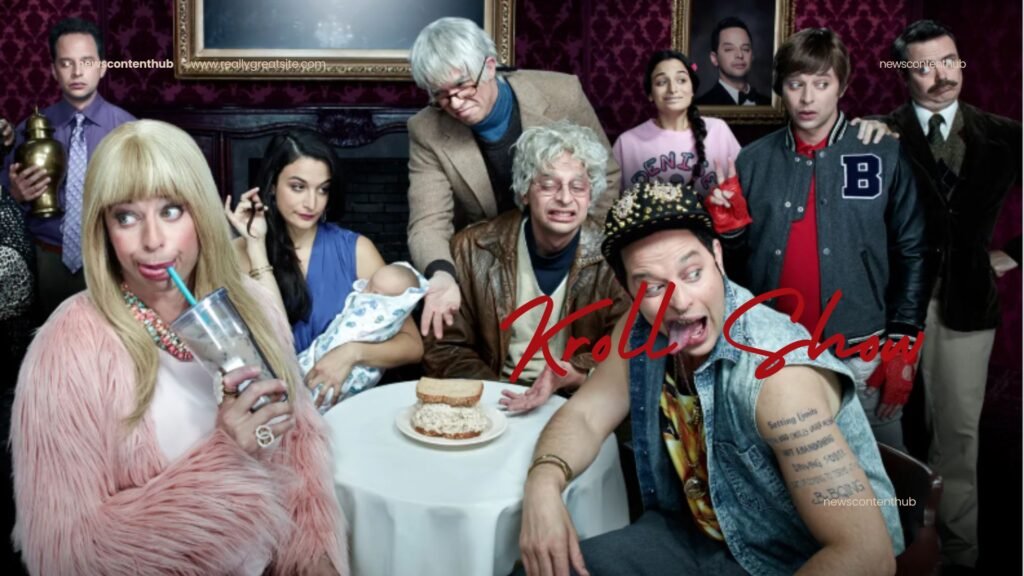
Probably the most popular recurring bits were those which went through the story of the two poor-publicists, Liz G. and Liz B., who botched the careers of a number of celebrities. Nick Kroll starred as Liz G. alongside Jenny Slate as Liz B., and the chemistry between them was quintessential of the series’s early seasons. Additionally, this drawing was a satirical portrait of the culture of reality TV, ridiculously highlighting the superficial, image-conscious aspects of Hollywood publicity. The Liz characters grew to such an extent in popularity that they were mentioned in some of the most memorable moments of the show.
Bobby Bottleservice
One of the standout characters was Bobby Bottleservice, who played a nightlife promoter who was convinced that he was popular in New York’s nightlife scene. This character enabled the show to lampoon the archetype of the male rapper and nightlife excess to the absurd. Still, the illustrations were grounded enough to be engaging—and not strictly cartoon. Bobby’s journey over a number of seasons demonstrated that the show maintained both the bizarre and believable character development.
Oh, Hello with Gil Faizon
Getting the most out of the series was probably Gil Faizon, who played alongside John Mulaney’s George St. Geegland. They were two old-fashioned, cultureless Upper West Siders who were obsessed with tuna sandwiches, playing together. This sketch went on to become a full stage show and eventually a Netflix special, and just how resilient Kroll Show’s characters were beyond their sketchy format.
Wheels, Ontario
Last but not least, ‘Wheels, Ontario’ was a hilarious take on serious teen shows such as Degrassi, which saw character Bryan La Croix get caught up in a series of teen stories that are as bizarre as they are melodramatic. Thus this sketch, far from being an adult-oriented sketch, proved to be a surprisingly successful genre-parody. This scene was a particular treat for fans of Canadian teen dramas for its faithful stylistic recreation.
Behind the scenes craft that shaped the series
It really helps to know how this show was created in the writers’ room, which enhances the enjoyment of the final product. Nick Kroll was said to have tested out numerous characters in his live stand-up and improv performances before making them television characters. As a result there were already established characters before cameras ever rolled, such as Bobby Bottleservice and Dr. Armond. Each sketch had an authenticity of lived-in reality that sometimes scripted concepts don’t achieve.
The show’s unique appearance is also the work of Jonathan Krisel’s directing. Krisel had previously worked with Portlandia and had the same inclination to allow sketches to breathe rather than rush towards punchlines. So some parts played out in a mockumentary fashion that the madness began to feel real in its world. Several veteran comedy veterans contributed gags, and others on staff were also writers, their gags being a mix of wide-ranging physical and more nuanced cultural commentary for savvy viewers.
There was also a focus on comedic chemistry, not just star power in casting throughout the series. Jenny Slate, John Mulaney and Jon Daly all contributed their own particular flags and anthems—flags that were all manic and all suited to Kroll’s flair. The ensemble work gave way to the fact that no individual was more central than the whole, the various storylines were connected and they were all conceived as a whole.
To compare the Series with other sketch comedy shows
It’s hard to imagine what made the series so unique if it is compared to other prominent sketch programs. For example, Saturday Night Live has a rotating cast that has a different set of characters doing new material every week, and there is little continuity between shows. In comparison, this show took the serialisation of its story more forthrightly than almost any sketch programme ever. The Portlandia characters were more similar, but even the latter was less multi-stranded in one season.
Another modern sketch series, Key and Peele, had a very different format, concentrating mainly on individual sketches centred around two main characters instead of a large cast of characters. As a result, it is striking to compare these programs with the level of ambition that took place in this particular structure for that time. The comedy critics consider it to be an underappreciated structural innovator, as few actors would attempt season-long character development in a 30-minute sketch format.
This comparison is also why some of the show’s mainstream viewers have had some trouble getting into the show when it debuted. Some readers who wanted light, entertaining and quick skits were at times confused by the interwoven plots and lack of continuity in viewing. But true enthusiasts who pledged to watch full seasons found a far more gratifying and fulfilling comedic experience than the average sketch series.
The music, set design, and choreography were all excellent
The series was widely respected in its time, though the ratings were not particularly high, given the high-quality programming typically offered by the larger networks. The show was always among the well-reviewed sketch comedy shows of its time, according to review aggregators, who praised its strong writing and acting. Specific sketches appeared in several entertainment publications, including the PubLIZity sections and Oh, Hello bits that were featured on best-of-the-year lists for their respective years.
Awards recognition was more scarce, but word of mouth ensued, with many within the industry citing the show as an important example of character-driven comedy writing. Nick Kroll’s individual castings were also met with praise in many of the seasons, and he was noted for his talent of being able to meld himself into wildly different characters in the same episode. The versatility proved to be a hallmark that helped secure Kroll’s wider profile as a one-of-a-kind comedic talent, beyond this one show.
This is a season-by-season overview of the Kroll Show
If you are looking for a better snapshot, the table below provides an overview of the seasons of Kroll Show and highlights some of the main points.
| Season | Release Period | Episodes | Notable Development |
| Season 1 | January–March 2013 | 10 | Introduced the main characters, including PubLIZity and Bobby Bottleservice. |
| Season 2 | January–March 2014 | 11 | Developed the character arcs further and introduced the Blisteritos crossover event. |
| Season 3 | January–March 2015 | 9 | Wrapped up major storylines as Kroll decided to conclude the series. |
Kroll Show released evenly on Comedy Central during three winters as seen above. In addition, the series became more ambitious with each season, especially with the crossover nature of some of its episodes that featured multiple characters appearing in the same episode. The increasing level of complexity helped to keep Kroll Show from becoming repetitive, which is what can sometimes happen in long running sketch formats.
The reasons why Kroll Show Still Resonates with Fans
The series was so popular that Kroll Show has a loyal following even years after the show ended that continues to watch episodes and recite their favorite moments. There are several reasons why this is the case. First, the show’s willingness to go all out on weird character concepts made the show a distinct comedic entity that most shows don’t match. Second, Nick Kroll’s versatility as a performer enabled him to convincingly embody wildly different characters in the same episode.
Also, Kroll Show had solid additional support: Jenny Slate, John Mulaney and Jon Daly all had a comic voice to add to the group. The series was never a one-man show, then, despite the title’s inclusion of Kroll. That team effort made Kroll Show feel more like a true comedy troupe show than a star vehicle. Showfans also love the way the show addressed pop culture fetishes that are still very much relevant, such as reality TV clichés and social media narcissism.
Legacy of Kroll Show Beyond Comedy Central is a DVD box set
Since its broadcast run, Kroll Show has not only left an impression on modern comedy but has also sparked a number of spinoffs. Most importantly, the Gil Faizon and George St. Geegland characters evolved into an all Broadway show called “Oh, Hello on Broadway,” which performed for more than a hundred shows. These characters were later brought to the screen of the Netflix comedy special, a stage show that never aired on TV. Thus, Kroll Show’s impact was far greater than the three seasons that aired on the cable network.
The show is also a creative incubator, as evidenced by Nick Kroll’s career trajectory since Kroll Show. He later co-wrote the animated series Big Mouth, one of Netflix’s most successful adult animated shows. It’s likely that much of the character-building instincts Kroll acquired at Kroll Show transferred to his subsequent work. It’s therefore important to understand Kroll Show as a stepping stone to the evolution of Kroll’s comedy during the next ten years.
Kroll Show was also cited by some industry sources as a precursor to the concept of interconnected sketch storytelling which would have a ripple effect on other character-driven comedy formats. It was never a big hit on the mainstream, but it was still important in the development of structure and character in sketch comedy, and had a significant impact on comedy writers and producers.
Final Thoughts on Kroll Show
To sum up, Kroll Show is one of the more imaginative sketch comedy series of its era, although never quite as popular as its equal. The series stands out from traditional sketch shows with Nick Kroll’s dedication to perfectly realized, recurring characters. The characters Kroll Show produced last the length of the original broadcast run – from PubLIZity to Bobby Bottleservice to the long-running Oh, Hello duo. If you watched Kroll Show when it originally aired or if you’re watching it for the first time via streaming, it’s still worth checking out. It’s a combination of absurdist character work and razor-sharp cultural satire that still works very well over 10 years later.
Frequently Asked Questions FAQs
Q1: How many seasons did Kroll Show run for?
Kroll Show ran for three seasons on Comedy Central, airing a total of thirty episodes between January 2013 and March 2015.
Q2: Who created Kroll Show?
Nick Kroll created the series alongside Jonathan Krisel and John Levenstein, with Krisel directing the majority of episodes.
Q3: What is the most famous character from Kroll Show?
Gil Faizon, performed alongside John Mulaney’s George character, became the most enduring creation from Kroll Show, later spinning off into Broadway and Netflix projects.
Q4: Why did Kroll Show end after three seasons?
Nick Kroll chose to end the series himself, explaining that the show’s storylines and characters naturally reached a satisfying conclusion by the third season.
Q5: Is this series similar to Saturday Night Live?
Not exactly, since Kroll Show relied on recurring characters and interconnected storylines rather than the weekly reset format typical of Saturday Night Live.
Q6: Where can fans watch Kroll Show today?
Kroll Show is available for streaming through Paramount Plus, along with select digital rental platforms that carry the complete Comedy Central library.


