


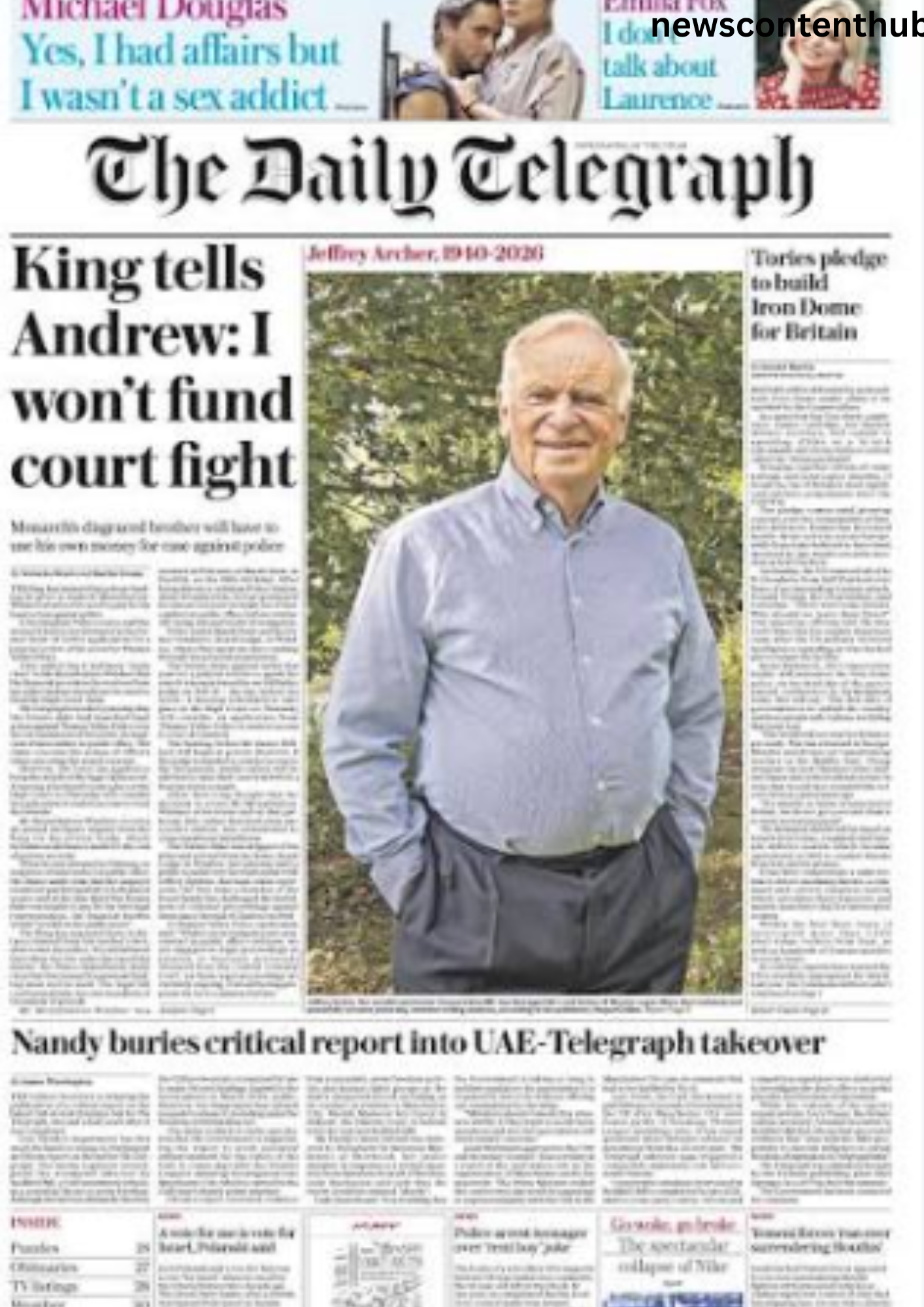
For over 160 years one newspaper has been influencing the British breakfast table. Its sharp pages, outspoken perspectives and renowned crossword still provoke conversation in kitchens and boardrooms both. Not many titles evoke such loyalty or arguments. But, whether you love it or not, you’re probably familiar with the name.
This guide tells the tale of the telegraph, from its days in the Victorian era to its status as a digital artifact today. In addition, you will learn how it is compared to a competitive title, how the newsroom functions at that title, and how to read it savvily. But we will take its criticisms into account as well, for no publication can be trusted blindly. Ready to explore? Let’s go on the journey now.
Table of Contents
What is the telegraph and why is it important?
The Daily Telegraph is a British national daily newspaper that has a loyal readership and political influence. It has a sister newspaper (the Sunday Telegraph) that covers the weekend. They are at the heart of a media group which also includes a large website, an app, newsletters and podcasts.
But why is it important? First, the paper has set the tone for centre right discussion in Britain for a very long time. It is read by politicians, business leaders and campaigners. Secondly, it has genuine authority in certain niche sectors like personal finance, travel and obituaries. Third, its investigations have influenced the national discussion and in some cases resulted in resignations.
Editorial Style, Brand Expansion, and Lasting Influence
Besides, the paper delves into one particular style. It is written by people who prefer to have strong opinions, good detail and a bit of humor. Readers frequently feel they are reading the voice of the authors behind the names. In the meantime, critics say that the paper takes one political side. Both perspectives are to be taken into account, and will be discussed further on.
Also, the brand is not limited to newsprint. Readers who browse the front page, but then turn away from the magazine, are drawn to dedicated travel and money brands. Those relationships are fostered through podcasts, newsletters and events. As such, the title has become a multi-platform media company.
To sum up, the title is relevant due to its historical, reach, and influence. It’s even worth noting that people do not care to read the editorials even if they disagree with them, they still follow the headlines of the newspaper. That attention ensures that the paper remains in the middle of the news cycle.
The History of the Telegraph
It starts in 1855. The Daily Telegraph and Courier was started in London by Colonel Arthur Sleigh. The business didn’t even make it a month before it faltered, and Sleigh was not able to pay his printer. However, the paper was handed over to Joseph Moses Levy, the printer. He changed British journalism and forever altered the course of professional journalism.
Levy reduced the price of the cover to one penny. Rivals’ cost was several times higher. This caused the Daily Telegraph to become the first penny daily in London and it gained a massive new readership. In just a few years it broke ground for the largest circulation in the world. Quality news was suddenly available to ordinary clerks, shopkeepers and tradespeople.
Bold reporting also became a hallmark of the paper. It dispatched explorers to go on expeditions, and it headed abroad wars with vigor. In addition, it adopted the new technology of the time, hence its name. The paper had to go with the news, and so did the electric telegraph.
Historical Development and Digital Transformation
The 20th century saw consolidation. The paper was merged with the Morning Post, one of the most famous conservative newspapers, in 1937. In 1961, later, the group started the Sunday Telegraph to take over the weekend business. In the meantime, British newspapers called it home and their staffs were in the center of the famous Fleet Street.
Readers will also recall the wartime role of the paper. Correspondents were stationed at the battlefronts and the title became known for its factual and dispassionate reporting of military matters. The paper thus became commonplace in officers’ messes and middle-class households throughout Britain.
Big change occurred in the 80’s and 90’s. It became the property of Conrad Black’s company in the mid-1980s and the newsroom then relocated from Fleet Street to Canary Wharf. In 2004 the Barclay brothers purchased the group. During all these changes the paper maintained its broadsheet standing and role in national politics.
Lastly came the digital era. In 1994 the paper began one of the first newspaper websites in Britain, which was called Electronic Telegraph. In today’s day and age the group operates paywalled digital subscriptions and has invested in video, newsletters and podcasts. History, that is, is a piece of paper that evolves with its readers.
How The Telegraph Cover the News
A coverage is spread out across multiple layers. News on political, business and crime topics is covered by national reporters. Foreign correspondent reports on international issues from the capitals of the world. Specialist writers explore topics like science, sport and Arts. These teams collectively provide print, web, app, and audio products.
Politics and opinion. The offering is at the core of politics. Daily analysis provided by parliamentary sketch writers, political editors and columnists. The editorial slant is quite conservative, and it’s clearly stated on the opinion pages. The paper also features writers challenging it on its own side, however. This means that readers frequently will come across persuasive debates in a single topic.
Business and money. The business desk focuses on markets, companies and the economy, and is strong on City readers. Pensions, savings, mortgages and tax are all covered in response to queries from personal finance journalists. For this reason, numerous individuals purchase the paper simply for its monetary pages. In addition, its consumer campaigns have led banks and the insurance industry to alter policies.
Telegraph’s Key Sections and Major Contributions
Transportation, culture, and lifestyle. Travel writers create and write hotel, resort and cruise reviews. In the realms of cinema, theatre, book and music, critics are responsible for both reviewing and judging. Journalists taste restaurants and recipes for reviews. In addition, the paper’s wine, motoring and gardening sections are read and gathered by loyal readers. This is because these pages expand the appeal beyond politics.
Weekend and magazines. The weekend edition features long-form and interview articles, plus glossy supplements. People come to these pages to sit down with a cup of coffee and hole up for hours. That means that for many readers, the weekend edition is a habit.
Sport. They’re given plenty of room for cricket, rugby, football and golf. The matches are analysed by experienced writers and former players with insight. Many readers make the sports section a highlight of their daily reading as a result.
Obituaries and crosswords. There’s hardly anyone with the obituary page like it. Authors tell the story of interesting lives of soldiers, scientists, and eccentrics. Similarly, its daily crossword and puzzles maintain readers’ interest. Those features foster habit and habit engenders loyalty.
Investigations. Investigative reporting provides the paper’s most dramatic moments. In 2009, its reporters revealed the scandal over MPs’ expenses, which shook Westminster. Several senior figures resigned, including the Speaker of the House. Therefore, that story still defines the paper’s reputation for public-interest journalism.
Online and mobile. The website and app deliver live blogs, video explainers, and newsletters. A subscription model gives paying readers full access, while free visitors see a limited selection. In addition, push alerts flag breaking stories. Therefore, the product now reaches readers who never touch paper.
The Telegraph Compared With Other Major UK Newspapers
Choosing a newspaper feels easier when you compare options. The table below summarises four prominent titles. Remember that circulation, pricing, and ownership change over time, so treat this snapshot as a starting point.
| Publication | Founded | General Political Leaning | Format and Style | Best Known For |
| The Telegraph | 1855 | Centre-right | Broadsheet, opinionated | Politics, obituaries, money pages |
| The Times | 1785 | Centre-right to centrist | Broadsheet tradition, formal | Long-form reporting, the Times crossword |
| The Guardian | 1821 | Centre-left | Compact, campaigning | Investigations, climate and social affairs |
| Financial Times | 1888 | Pro-business, liberal economics | Pink paper, data-rich | Global markets and economic analysis |
Key Lessons on Comparing Newspapers, Media Bias, and Subscription Costs
Several lessons emerge. First, ownership and funding determines priorities. Subscription titles will follow readers in a loyal manner, advertising driven titles will follow clicks. Second, political leanings affect story selection and tone. Third, there is a variety in strengths of specialists. The Financial Times is the leader in global business and the Guardian in environmental news. The Daily Telegraph’s commentary is more conservative, while its consumer finance is excellent.
Savvy readers, therefore, blend sources together. It may be useful to read one paper on economic information, one paper on investigations, and one paper on opinion. Plus, it shows a comparison of coverage of the same story which shows gaps and framing differences. That habit cultivates media literacy – and that’s more important than ever.
There’s also the price factor. The costs of quality titles on the Internet add up fast. So many readers opt for one primary paper and sample others via free articles, newsletters, and library access. That way, you’ll have a broad view and keep costs low.
The Telegraph maintains rigorous editorial standards and has a business model that focuses on profit.
Standards are the basis of trust. The paper is a part of the press regulation system of the United Kingdom and adheres to the Editors’ Code of Practice. The code includes guidelines for accuracy, privacy, harassment and child protection. Journalists should make significant mistakes quickly. In addition, any readers who think the paper has violated the rules can complain to the regulator.
The roles of opinion and news differ. News reporters tell facts and sources, and columnists present a point of view. But the line becomes more ambiguous when information is packaged tightly into headlines and social media posts, online. Before sharing a piece, you should see if it is news, analysis or opinion.
Money is not the sole determinant of journalism, either. The paper also charges for digital viewing, meaning that it is not as dependent on clickbait ads. Still, there’s a tension created in subscription models to please the core consumers. Pressure contracts the spectrum of opinion, critics say. Their supporters say that faithful readers pay for good reporting.
Digital Subscriptions, Media Ownership, and the Future of Newspapers
There are other reasons why digital subscriptions are important. They have a direct link with readers so that editors know what readers like the most. In the meantime data aids teams making investment decisions. But good editors know, however, that popularity and importance don’t necessarily go together.
Ownership has also been in flux. The newsroom has been in the news over several proposed sales over the last few years, and the situation could be different since this article. So, make sure to review the current information regarding the group ownership. Ownership is important, since owners hire editors and budget. Despite all this, editors continue to make decisions every day.
Last but not least, the paper has to deal with problems like all legacy media outlets. Print sales continue to decline and competition from digital keeps increasing. As a result, the newsroom tries a few things out with video, audio and newsletters. Those experiments will determine its fate.
Smart Ways to Read the Telegraph Every Day
Great journalism is good only when read well. These habits make scrolling education.
Know the section. Look for any indication if the piece is news, opinion or sponsored content before clicking. Labels are typically found near the headline. That instant glance alters your assessment of the argument.
Use the newsletters. Each day a short briefing is sent to the Editors summarising top stories. They help save time and draw attention to stories you may be unaware of. Additionally, you can select topics relevant to your interests.
Play the money pages. Personal finance guides make pensions, saving and tax easy to understand. Check their recommendations against official government information before taking action. Otherwise, you may end up doing what isn’t right for you.
Practical Ways to Use Newspapers for Learning and Critical Thinking
Solve the crossword. Puzzles help to refresh your vocabulary and take a break from the news. Not to mention, they’re a wonderful habit to get into daily.
Read the obituaries. Short, engrossing biographies are provided on these pages. They expose the history from personal lives.
Make sure the archive is used judiciously. The more the years, the more the archive. Old articles can be found and searched to see how stories developed and opinions changed. The archive thus turns into a convenient resource for the students and writers.
Cross-check big claims. Even the best newsroom makes mistakes. Compare content of major stories with at least one other reliable source. Consequently, you get a more complete picture.
Read opposing views. Pull a Telegraph column and a Guardian column about the same topic. Pay attention to the similarities and differences in the facts and interpretations. In that exercise, critical thinking is strengthened.
Look at dates and by-lines. Old articles tend to be retweeted on social media. You are not going to spread out old information when you take a quick look.
I can hear the wind blowing in the background
We started from a newspaper more than 160 years old. This tour adds depth to the picture after this. The Telegraph became known as the result of its accessibility, its willingness to report and its readership, who are loyal to its voice. It stopped the expenses scandal, created a well-known obituaries page and embraced the digital world.
But there is no blind loyalty when it comes to trust. The telegraph becomes one of many voices in the reader’s media diet when he or she is a smart reader. They are curious, challenge coverage and ask questions. Newspaper Trivia: Here are some things to do to start the day! Little habits, bright minds.
Frequently Asked Questions FAQs
Q1: Is the Telegraph a reliable source of news?
Yes, it is a long-established national title that follows the UK Editors’ Code and corrects errors. However, it has a clear conservative editorial stance. Therefore, read its opinion pieces as arguments, not neutral reports, and compare them with other outlets.
Q2: Who owns the Telegraph?
Ownership has changed hands and has been the subject of several proposed deals in recent years. Because the situation moves quickly, check the latest reports from reputable outlets for current details. Owners appoint senior editors, but day-to-day reporting rests with journalists.
Q3: Is the Telegraph free to read online?
Typically, only partly. The site offers a limited number of free articles, and a subscription unlocks full access. Prices and plans change, so check the website for current offers.
Q4: What political stance does the Telegraph take?
The paper traditionally backs conservative politics and supports the Conservative Party at election time. Nevertheless, it publishes columnists with varied views, and its news reporting covers all parties. Consequently, readers see criticism of governments of every colour.
Q5: How does the Telegraph make money?
It earns revenue from digital subscriptions, print sales, advertising, and events. Subscriptions now play a growing role, because they provide steady income. Consequently, the newsroom can plan long-term investigations.


